
All-In with Chamath, Jason, Sacks & Friedberg - Scott Bessent | All-In in DC!
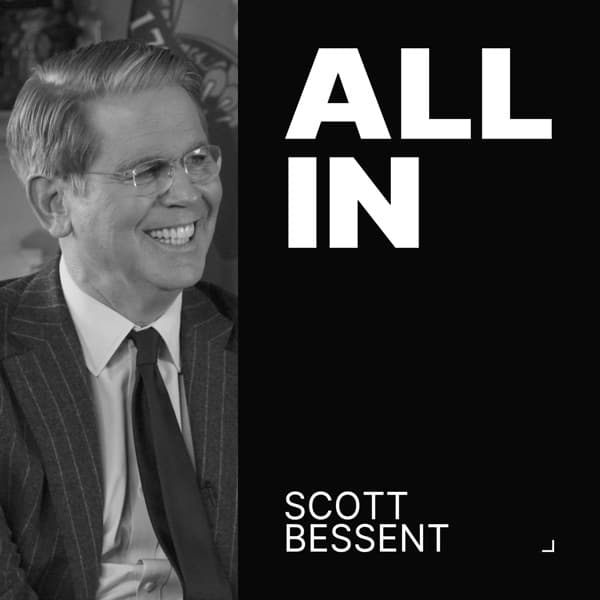
The conversation with Scott Besant, Treasury Secretary, covers strategies to manage the U.S. economy, focusing on reducing the federal debt and deficit without causing a recession. Besant emphasizes the need for controlled spending cuts, deregulation, and private sector growth to balance the economy. He highlights the importance of reordering international trade, bringing manufacturing jobs back to the U.S., and ensuring energy affordability to support economic growth. The discussion also touches on the potential of a sovereign wealth fund to manage national assets and the need for regulatory reforms in banking to stimulate economic activity. Besant stresses the importance of aligning government actions with public sentiment and addressing affordability issues to restore the American dream.
Key Points:
- Reduce federal debt and deficit gradually to avoid recession.
- Deregulate financial systems to encourage private sector growth.
- Reorder international trade to bring manufacturing jobs back to the U.S.
- Create a sovereign wealth fund to manage national assets effectively.
- Address affordability issues to support the American dream.
Details:
1. 🕊️ Gathering Insights in Washington D.C.
- The visit includes strategic meetings with influential figures such as David Sachs and Elon Musk, highlighting the importance of gathering diverse perspectives.
- The focus is on understanding the intricacies of the national debt, aiming to gain comprehensive insights that can influence decision-making.
- The discussions are geared towards exploring potential solutions and strategies concerning national financial issues.
- The visit serves as a platform for exchanging ideas and fostering relationships with key stakeholders that could drive impactful change.
2. 🏛️ Anticipating an Exclusive Interview
- An exclusive interview is scheduled with Scott Besant, the Treasury Secretary of the United States, focusing on the deficit and current affairs in Washington, D.C.
- The anticipation is high for insights into the economic strategies and policies being implemented at the national level.
- The interview is expected to provide valuable information on fiscal policies directly from a key government official.
- Topics likely to be addressed include the national deficit, economic recovery plans, and future fiscal policies.
- The outcome of the interview could significantly impact public understanding and confidence in government fiscal strategies.
3. ✨ A Day at the White House
3.1. Exploring the White House
3.2. Notable Features and Interactions
4. 🏛️ White House Exploration and Encounters
4.1. Exploring the East Wing
4.2. Encounter with Secret Service
5. 💼 Interview with Treasury Secretary Scott Besant
5.1. Economic Overview and Ground Truth Data
5.2. Economic Policies and Challenges
5.3. Economic Forecasts and Future Outlook
6. 🔍 Scott Besant's Financial Background
- Scott Besant's financial acumen is deeply rooted in his father's experience as a real estate developer who navigated various economic cycles, instilling the importance of risk management.
- Besant's strategic focus is on mitigating risks, a crucial insight that underpins his approach to financial planning and decision-making.
- His career path includes specific achievements that reflect his commitment to risk management, though these details need expansion to fully capture his impact.
7. 📈 Macro Investing and Risk Management
- An internship with Jim Rogers, a prominent figure in the investment world and known for his partnership with George Soros, provided foundational knowledge in investment business. This experience significantly influenced the speaker's approach to macro investing and risk management.
- Key learnings from the internship included practical insights into global market trends and strategic investment decision-making.
- The internship emphasized the importance of understanding economic indicators and their impact on investment strategies, contributing to a more nuanced and informed approach to managing financial risks.
- Exposure to real-world investment scenarios during the internship fostered a strategic mindset, enabling the application of theoretical knowledge to practical challenges in the financial markets.
8. 📊 Macro Trading and Historical Insights
8.1. Career Journey and Strategic Transitions
8.2. Macro Trading Insights
9. 💡 Economic Policies and Challenges
- More than 40 years without a down year indicates an impressive track record, suggesting strong and consistent strategy execution.
- The approach of 'invest, then investigate' implies a proactive investment strategy that emphasizes flexibility and adaptability, allowing for adjustments based on real-time market feedback.
- The phrase 'it takes courage to be a pig' reflects the necessity for significant risk-taking to achieve substantial gains, highlighting the balance between risk and reward.
- Real-time feedback in markets provides immediate data, facilitating swift decision-making and strategy adjustments, crucial for staying competitive in dynamic market environments.
- The strategic emphasis on risk-taking, flexibility, and timely feedback suggests a comprehensive approach to navigating economic challenges.
10. 🏠 Housing and the American Dream
- Macro investing involves trading currencies, bonds, commodities, equities, and credit, and requires a deep understanding of central bank actions and government bond movements.
- Successful macro investors spend significant time with economists worldwide to understand global capital flow dynamics.
11. 💸 Debt, Spending, and Economic Strategy
- Bruce Kovner, a notable macro investor, emphasized the importance of envisioning a different future and believing it could happen as a key to success.
- Envisioning what could happen post significant global events (e.g., the fall of the Iron Curtain) is essential for strategic planning.
- Managing risk while imagining these significant changes is crucial for economic strategy and venture capital.
12. 🔧 Financial Deregulation
- During the financial deregulation period in the UK, the speaker worked as an analyst alongside Stan, a portfolio manager, and George, a risk manager.
- This era marked significant changes in the financial industry, similar to what is currently being seen in the US.
- The speaker experienced an 'aha' moment, realizing the profound impact of the new financial reality in England, which can be seen as a precursor to current financial shifts globally.
- Financial deregulation in the UK led to a more competitive and innovative financial market, influencing policy changes and market dynamics.
13. 🌍 International Trade Policies
- The UK's mortgage system relied entirely on floating rates, meaning changes in interest rates by the Bank of England directly impacted mortgage costs, creating financial vulnerability for homeowners.
- The UK's participation in the Exchange Rate Mechanism required maintaining its currency value within a specific band against the Deutsche Mark, influencing monetary policy decisions.
- To protect currency value within the Exchange Rate Mechanism, the UK had to raise interest rates, risking financial strain on homeowners due to the immediate effect on mortgage costs.
- These policies had broader implications on international trade, affecting currency stability and economic relations with European partners.
14. 🏢 Treasury's Role in National Security
- The Treasury has a significant strategic influence on national security through its decision-making process, which involves positioning and counterbalancing market moves to achieve a net change of 2.5%.
- The narrative involving Stan Druckenmiller and George Soros illustrates aggressive investment strategies, highlighting a mindset of maximizing strategic opportunities by considering substantial increases in investment, such as tripling a fund's deployment.
15. 🇺🇸 Political Dynamics and Leadership
- In September 1992, the British government faced immense market pressure that forced them to purchase an unlimited amount of pounds, highlighting the vulnerability of political decisions to financial market forces.
- The government's attempt to raise interest rates significantly to stabilize the currency was unsustainable, leading to a notable 20% gain in a single day, demonstrating the potential for dramatic market responses to political interventions.
- This scenario underscored the strategic importance for political leaders to anticipate 'the move after the move,' similar to strategies in backgammon, to effectively navigate subsequent opportunities and challenges post-initial interventions.
16. 💡 Energy Policy and Economic Transition
- The real economy is dislocated from the financial economy, exemplified by the Main Street-Wall Street dichotomy.
- An unsustainable situation remains unsustainable, highlighting the need for strategic intervention.
- The speaker met with President Trump 18 months ago, emphasizing the importance of addressing economic transitions.
- Strategic economic transitions involve aligning policy measures with real-world economic needs, focusing on sustainable growth.
- Concrete examples of successful economic transitions include countries that have integrated renewable energy into their economic frameworks, resulting in job creation and reduced carbon footprints.
- Metrics show that economies embracing green energy policies have seen a 20% increase in employment within the renewable sector.
- Meeting with policymakers like President Trump underscores the importance of government involvement in driving these transitions.