OpenAI: Custom instructions and enhanced memory in ChatGPT allow users to personalize interactions, making ChatGPT adapt to individual work styles and preferences.
How I Built This with Guy Raz: The podcast episode discusses the creation and growth of Substack, a platform for writers to connect directly with readers, founded by Chris Best and Hamish McKenzie.

OpenAI - Personalize ChatGPT with custom instructions
The video explains how users can personalize their ChatGPT experience through custom instructions and enhanced memory features. By accessing settings, users can set custom instructions that dictate how ChatGPT should interact with them, including setting a nickname, specifying their role, and defining the tone and style of responses. This personalization helps ChatGPT adapt to the user's work style, making it more effective and aligned with their needs. Additionally, the enhanced memory feature allows ChatGPT to reference past conversations, not just the current chat, making it more contextually aware and responsive. This transforms ChatGPT from a mere tool into a collaborative teammate that understands and anticipates user needs, thereby improving productivity and interaction quality.
Key Points:
- Custom instructions allow users to set preferences for ChatGPT's interaction style, including tone and response style.
- Users can specify roles and nicknames to personalize their ChatGPT experience.
- Enhanced memory enables ChatGPT to reference past conversations, improving contextual awareness.
- These features transform ChatGPT into a more collaborative and adaptive tool.
- Personalization leads to improved productivity and interaction quality.
Details:
1. 🔧 Accessing Custom Instructions
- To access memory and custom instructions, click on your profile in the top right corner, go to settings.
- Navigate to the 'Memory' section to manage saved data and instructions.
- Ensure you have the necessary permissions to modify custom instructions.
- Use the provided interface to add, edit, or delete instructions as needed.
- Refer to the help section for detailed troubleshooting if issues arise.
- Consider backing up existing settings to avoid data loss during modifications.
2. 🛠️ Custom Instructions for Tailored Interaction
- Custom instructions allow ChatGPT to adapt to individual user styles, improving the quality, tone, and focus of its responses.
- These instructions enable users to dictate specific words and styles ChatGPT should use, enhancing personalization.
- Enhanced memory capabilities allow ChatGPT to reference past conversations, providing context beyond the current chat.
- Users can implement custom instructions by specifying preferred language, tone, and response style to create a more personalized interaction experience.
- Examples of custom instructions include requesting ChatGPT to use simpler language for tech explanations or adopting a formal tone for professional settings.
- The main benefits of custom instructions include increased user satisfaction through tailored interactions and improved communication efficiency.
- Limitations include potential misinterpretation of custom instructions by ChatGPT, requiring clear and precise input from users.
3. 🎭 Setting Nickname and Preferences
- Users can customize their interaction by setting a nickname for themselves, enhancing personalization.
- Specify your role, such as 'solutions engineer,' to tailor ChatGPT's responses to your professional context.
- Preference settings allow users to dictate the style of communication, opting for traits like 'skeptical' and 'forward-thinking' over 'poetic.'
- Users can provide additional preferences, such as wanting examples and analogies in explanations or having ChatGPT play 'devil's advocate.'
- These custom instructions can be applied across all ChatGPT capabilities, ensuring consistency in interactions.
4. 💾 Applying and Testing Custom Settings
- The system has successfully integrated custom settings, demonstrated by ChatGPT acknowledging and implementing feedback for simpler and more direct communication.
- Real-time testing of system prompts and evaluations shows immediate application of changes, improving the interaction quality.
- The separation between the application of settings and testing phase is clear, ensuring methodical implementation and assessment.
- Detailed outcomes from the testing process highlight enhanced system responsiveness and user satisfaction.
5. 🤝 Memory: Transforming ChatGPT into a Teammate
- Memory transforms ChatGPT from a tool into a teammate that understands your workflow.
- It provides analogies and uses plain language, enhancing usability.
- Teams have reported changes in their workflow with the integration of ChatGPT's memory capabilities.

How I Built This with Guy Raz - Substack: Chris Best and Hamish McKenzie

Substack was founded in 2017 by Chris Best, a tech entrepreneur, and Hamish McKenzie, a journalist. The platform allows writers to publish content and charge readers directly, bypassing traditional media outlets. Initially met with skepticism, Substack has grown significantly, with over 5 million paid subscriptions. The business model is straightforward: writers charge a subscription fee, and Substack takes a 10% cut. This model has proven lucrative for some writers, with over 50 earning more than half a million dollars annually. The platform's growth was accelerated during the COVID-19 pandemic as journalists sought independence from traditional media constraints. Substack's commitment to free speech, allowing content with few exceptions, has attracted diverse voices. Despite challenges, including competition and controversies over content moderation, Substack continues to expand, offering writers a platform to monetize their work directly.
Key Points:
- Substack allows writers to charge readers directly, taking a 10% cut of subscription fees.
- The platform has over 5 million paid subscriptions, with some writers earning significant income.
- Substack's growth was boosted by the pandemic and its stance on free speech.
- The platform offers a simple way for writers to manage subscriptions and content without technical skills.
- Substack's model challenges traditional media by empowering individual writers.
Details:
1. 🎧 Wondery Plus & Sponsors Overview
1.1. Wondery Plus Benefits
1.2. Sponsorship Model
2. 🎨 Canva & American Express Sponsorships
2.1. Canva Presentations
2.2. American Express Benefits
3. 🏠 Airbnb Promotion & Podcast Introduction
- Airbnb's platform allows travelers to feel at home anywhere in the world, emphasizing its role in creating a comfortable experience for users.
- A call to action for potential hosts highlights Airbnb's user-friendly tool for estimating earnings, encouraging more people to monetize their spaces.
- The discussion reflects challenges in monetizing online content, underlining the difficulty of persuading users to pay for digital services, which suggests an opportunity for innovative revenue strategies.
- The podcast introduction should provide a brief overview of the topics covered, such as travel tips, hosting experiences, and trends in the hospitality industry, to attract a targeted audience.
4. 🚀 The Rise of Substack: A New Platform for Writers
- Substack empowers writers by allowing direct connection with readers, bypassing traditional media constraints, which fosters creative freedom.
- The trend of moving from traditional media to platforms like Substack, YouTube, and social media signifies a major shift in how audiences consume content.
- Remarkably, 140,000 YouTubers have built audiences comparable in size to traditional media outlets, highlighting the substantial influence of independent creators.
- Platforms like Substack are contributing to the declining influence of traditional media, providing alternative channels for content distribution.
5. 🗞️ Substack's Business Model and Growth
5.1. Substack's Business Model
5.2. Substack's Growth
6. 📜 Chris Best's Background and Early Career
6.1. Chris Best's Background
6.2. Substack's Policies and Future Ambitions
7. 🛠️ Building Kik Messenger: Success & Challenges
7.1. Early Inspiration and Initial Projects
7.2. Development of Kik Messenger
7.3. Challenges and Legal Battles
7.4. Personal Stories and Transitions
7.5. Substack's Founding and Early Development
7.6. Substack's Growth and Strategy
7.7. Substack's Challenges and Market Position
7.8. Strategic Decisions and Lessons Learned
8. 💡 The Birth of Substack: Innovating Journalism
8.1. Offer to Join Twitter and Launch of Substack Notes
8.2. Twitter's Reaction and Substack's Resilience
8.3. Substack's Growth Metrics
8.4. Media Landscape Shift
8.5. Substack's Business Strategy
8.6. Substack's Role in Media Innovation
9. 🔚 Episode Wrap-Up & Credits
- Ensure to follow the podcast on your app to stay updated on new episodes.
- Sign up for the newsletter at GuyRoz.com or on Substack for more updates.
- The episode was produced by J.C. Howard with music by Ramteen Arablui.
- Editing was done by Neva Grant, with research assistance from Iman Maani.
- Engineering was handled by Patrick Murray and Jimmy Keeley.
- The production team includes Catherine Seifer, Casey Herman, Alex Chung, Sam Paulson, Chris Messini, Carrie Thompson, John Isabella, and Elaine Coates.
Included Channels
 Anthropic
 OpenAI
 Lex Fridman Podcast
 All-In with Chamath, Jason, Sacks & Friedberg
 Modern Wisdom
 Greymatter
 a16z Podcast
 Lenny's Podcast: Product | Career | Growth
 No Priors AI
 Lightcone Podcast
 In Depth
 The Twenty Minute VC (20VC): Venture Capital | Startup Funding | The PitchHow I Built This with Guy Raz
 BG2Pod with Brad Gerstner and Bill Gurley
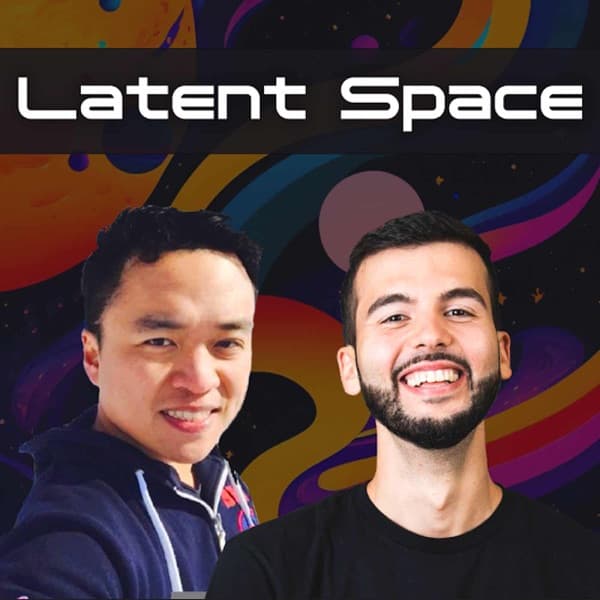 Latent Space: The AI Engineer Podcast
 Fireship